Whisper
Interactive Kinetic Autonomous Installation
Finalist of Hybrid Award of Lumen Prize 2025 & Shortlisted for FutureTense Award 2025
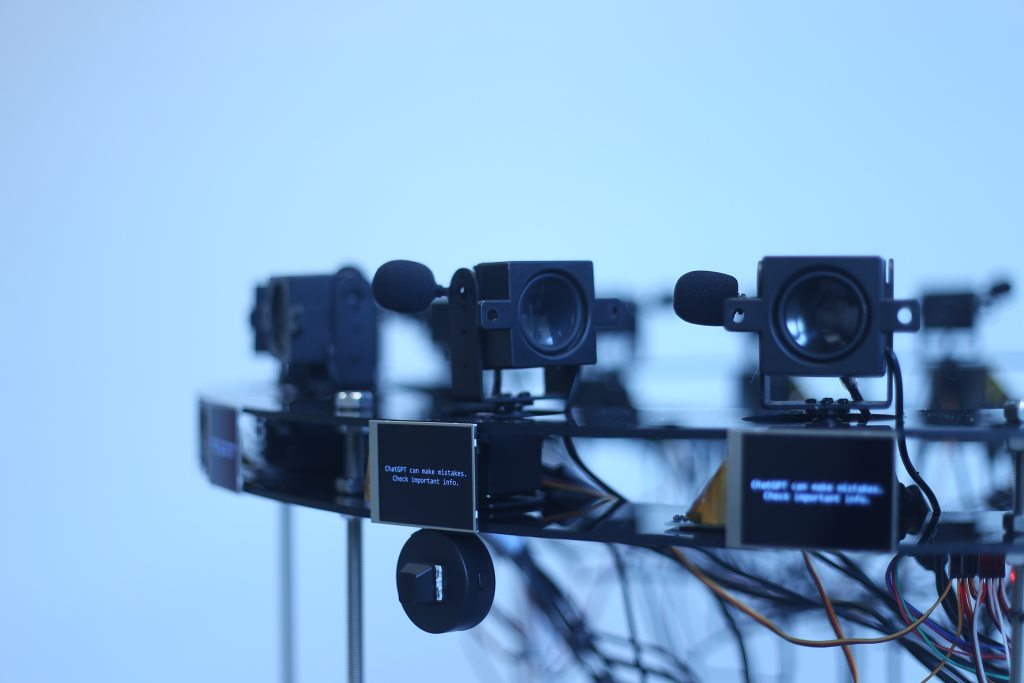
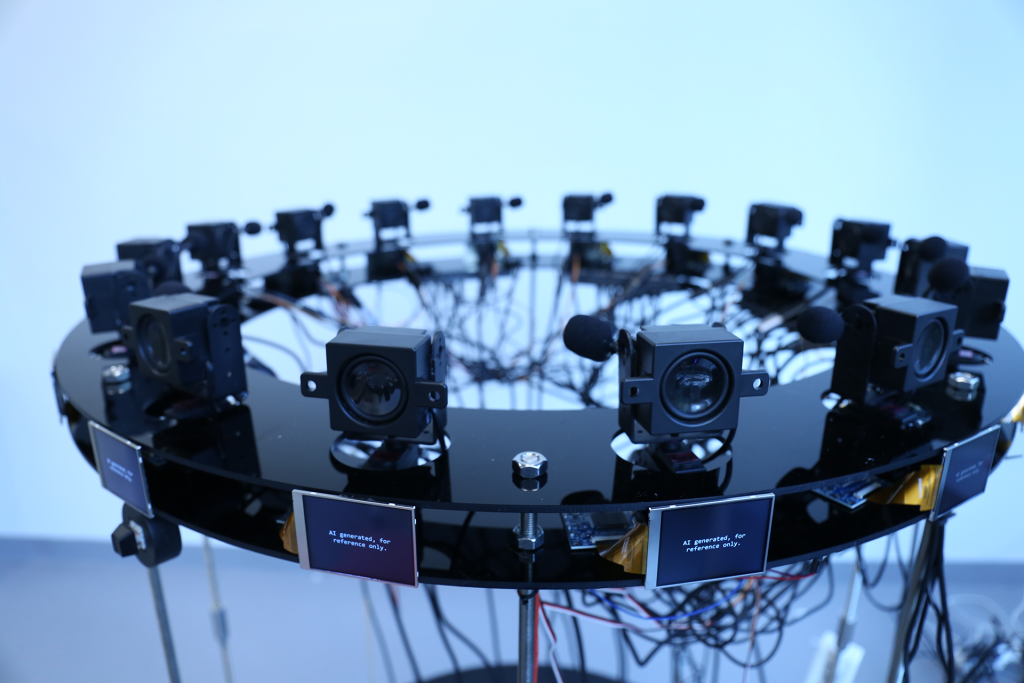
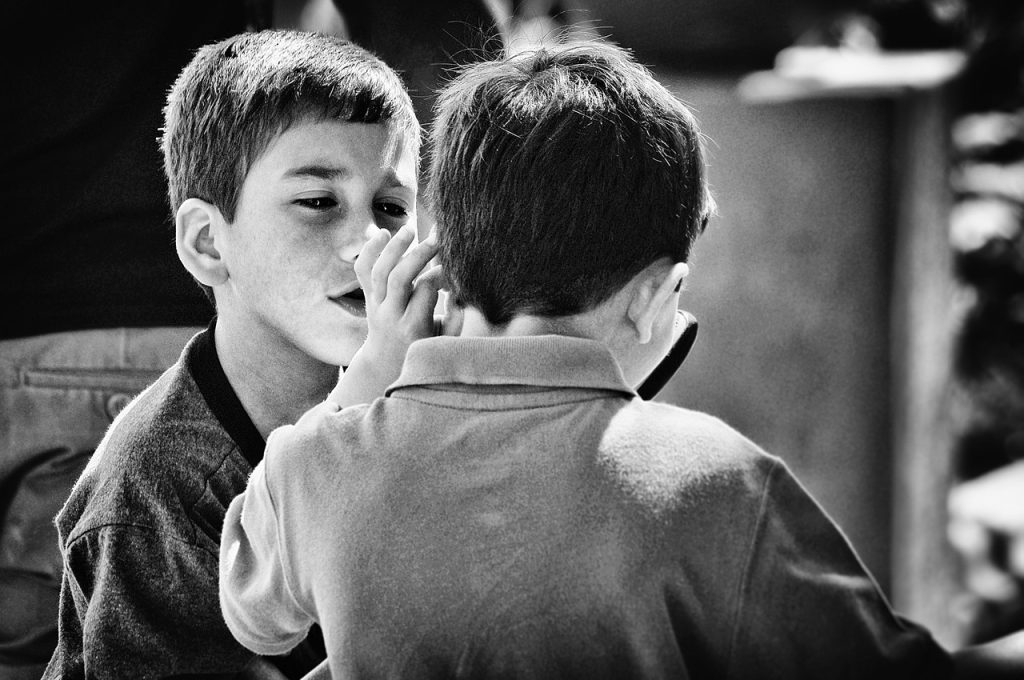
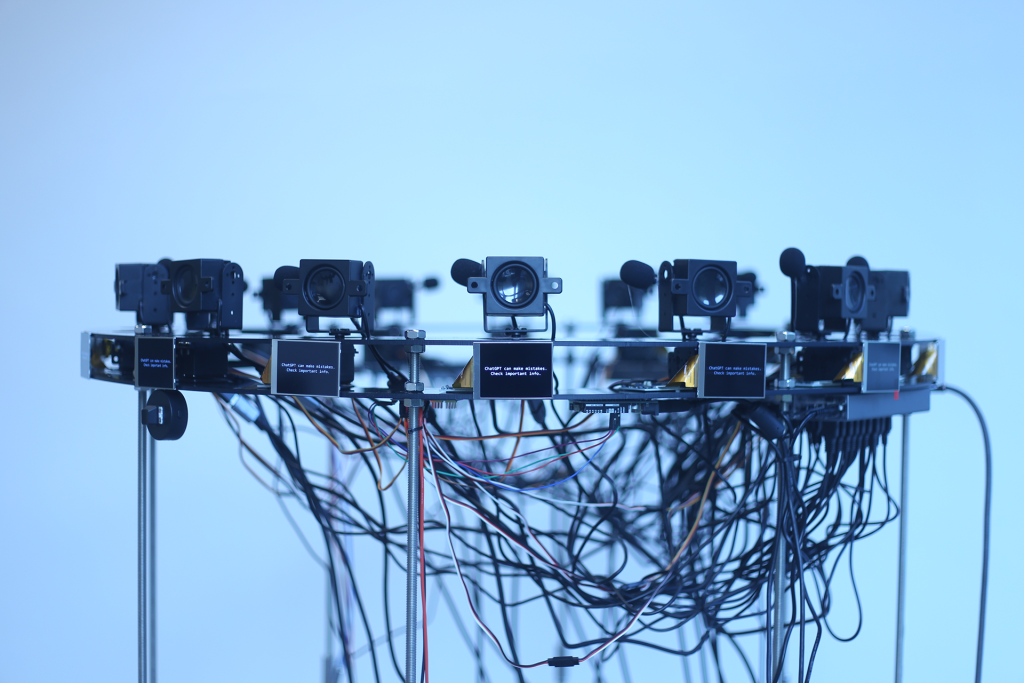
Whisper is a kinetic art installation that simulates a looping Game of Telephone (also known as Chinese Whispers). It uses AI’s text-to-speech (TTS) and speech-to-text (STT) services to repeatedly transmit the subtle warnings displayed on the interfaces of popular AI chatbot agents. These include: “ChatGPT can make mistakes. Check important info.” (ChatGPT), “Gemini can make mistakes, including about people, so double-check it.” (Gemini), and “AI generated, for reference only.” (DeepSeek).
The process involves one unit converting text into speech with TTS, passing it to the next unit, which uses STT to recognize the speech and generate new speech based on the recognized text, continuing in a loop.
This installation operates in real time. Each unit continuously captures the speech output of the previous unit through a microphone and performs transcription. As a result, the system does not operate in isolation: its recognition process is inevitably influenced by the surrounding environment. Conversations and sounds from visitors nearby occasionally enter the system, interfering with the transcription and becoming part of the transmitted message.
In this work, TTS and STT, two of the most widely applied AI services, demonstrate their reliability. Meanwhile, the format of the telephone game serves as a metaphor, hinting at the potential vulnerabilities and risks inherent in these technologies and the system itself.
During the exhibition, visitors are allowed to intervene in the process, speaking into the system in order to disrupt the chain of transmission. These interactions become part of the work itself. The work observes how people respond to moments when technology fails or behaves unexpectedly. Such moments often produce curiosity, or even a playful desire to sabotage the system. Whisper does not judge these reactions; rather, it treats them as a reflection of the human attitude toward technological systems.
In the process of technological development, trust, skepticism, fascination, and disruption often coexist. This work does not aim to prove whether AI is reliable or unreliable; instead, it seeks to provoke reflection on the blind spots that underpin our trust in the technology and the systems.
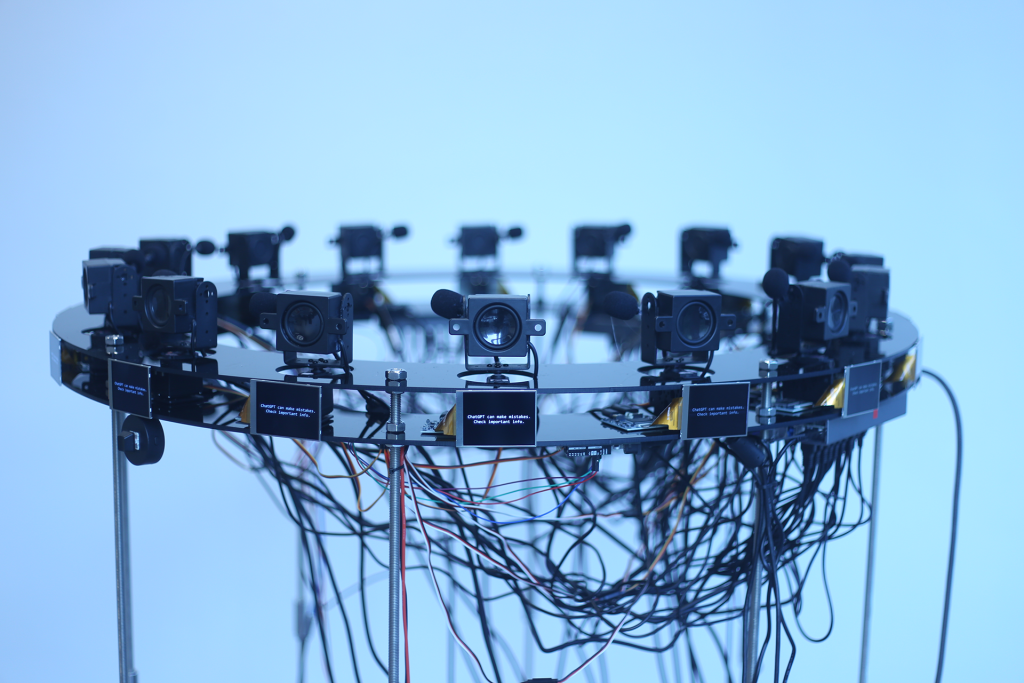
Whisper 是一件動態裝置藝術作品,模擬了一個循環的傳話遊戲。它利用人工智能的文本轉語音(TTS)和語音轉文本(STT)技術,不斷傳遞當前流行 AI 的聊天機器人界面上的那些不起眼的警示語句。這些語句包括:「ChatGPT 可能會犯錯,請核對重要資訊」(ChatGPT)、「Gemini 可能會犯錯,請仔細核查」(Gemini),以及「AI 生成,僅供參考」(DeepSeek)。
這一過程包括:一個單元通過 TTS 將文字轉換為語音,將其傳遞給下一個單元,下一個單元通過 STT 識別該語音並基於識別出的文字生成新的語音,並以此循環往復。
這件裝置以即時的方式運作。每一個單元都透過麥克風持續接收上一個單元輸出的語音並進行語音轉文字(STT)轉錄。因此,系統並非在一個封閉的環境中運作:其辨識過程不可避免地會受到周圍環境的影響。觀眾在附近的談話或聲音有時會被系統誤讀,進而被納入傳遞的訊息之中。
在展覽過程中,一些觀眾也會嘗試刻意介入這個過程,對著裝置說話,試圖干擾這個傳話循環。這些行為逐漸成為作品的一部分。因此,觀眾的反應與行為並不只是偶然的現象,而是這件裝置作品所探討的重要面向之一。
作品觀察的是人們在技術出現錯誤或產生偏差時所展現出的反應。這些時刻往往會引發一種帶有娛樂性的愉悅感、好奇心,甚至是一種想要「破壞」系統的衝動。Whisper 並不對這些行為做出評價,而是將其視為人類面對技術系統時的一種普遍心態。
在技術發展的過程中,信任、懷疑、迷戀與干擾往往同時存在。在這件作品中,TTS 和 STT 作為當前應用最廣泛的兩項人工智能服務,展示了其可靠性。然而,傳話遊戲的形式作為隱喻,暗示了這些技術及其所處系統本身潛在的脆弱性與風險。這件作品並不試圖證明人工智能是可靠還是不可靠,而是希望引發人們對技術信任中的盲點的反思。